
To Travel or Not to Travel
As with life in general, African safari travel is never entirely without risk, even though guest safety is always our top priority. The travel industry is usually the first to suffer whenever an incident occurs, and news headlines make guests feel unsafe. Any news that increases the level of real or perceived risk for travellers is bad news for the travel industry.
The incidents that sparked my musings on this topic were not the news headlines themselves but people's responses to the news.
Take the recent Ebola outbreak in the DRC, for example. Yet another outbreak of a new strain of Ebola has rattled the DRC, and a handful of cases were also reported in the capital city of neighbouring Uganda (imported by travellers from the DRC). The DRC is not really a popular travel destination, but Uganda is. News of Ebola in Uganda is always going to be devastating to tourism, no matter how low the case numbers are.
I don't want to downplay or trivialise a disease as horrible as Ebola, but it's also nothing new. We've seen this happen before, many times.
This week, I came across a question from a couple in their mid-70's who had an upcoming trip to Tanzania booked for later this year. Their question was about Ebola, and whether it was still safe to travel. They sounded fearful and apprehensive.
My immediate instinct is to respond with empathy. Their fears are valid, and their concern is understandable. They're planning a trip to the heart of East Africa, and have seen headlines about Ebola cases in Uganda, which is adjacent to Tanzania. Maybe it's better to cancel or postpone our upcoming trip to Tanzania? Their question seems entirely reasonable.
My next instinct is to respond with a factual and rational perspective: There is no Ebola in Tanzania. And even if there was, tourists are generally not at risk. Ebola is not an airborne virus; it doesn't spread like coronavirus. It spreads only by close personal contact. The actual risk to tourists is negligible, and there is absolutely no reason to cancel or postpone your trip.
Reassurance. Rational facts.
But rationality doesn’t trump emotion. Facts do not always succeed in rooting out fear.
In my mind, following these initial instincts, a different line of thought arose: You're seventy-something. Our time on earth is limited. Having the ability, money, and health to travel and see this beautiful planet is an incredible blessing. A rare opportunity that will not last forever. Pack your bags! Don't let fear or anxiety or a sliver of risk (real or perceived) rob you of this wonderful opportunity. If you cancel or postpone, who knows whether you'll ever get the chance again to visit East Africa?
But what about safety?

Remote Northern Kruger
This line of thought ties into what I saw happening in response to the brutal murder of two locals at a remote lookout point in the far north of the Kruger National Park.
The news headlines quickly spread around the world: South African tourist couple hijacked and murdered in the world-famous Kruger National Park. A terrible and devastating incident, the first time in its 100-year history that something like this has happened in the Kruger National Park.
It appears that poachers or criminals from Mozambique had ambushed the couple at a lookout point where three countries meet. The viewpoint is called Crook's Corner, historically named such for the ease with which criminals could escape across the border into neighbouring Mozambique or Zimbabwe. Which is exactly what happened. The hijackers allegedly fled across the border into Mozambique with the victims' vehicle.
The immediate human response to such an incident is shock and horror. Understandably, every tourist with an upcoming trip to Kruger is naturally wondering if it's still safe to travel.
The emotional, fear-based inclination is to cancel one's upcoming trip to Kruger. Too risky. What if I become the next victim? Our need to feel safe is hardwired into us.
A more rational, analytical person might attempt to calculate the actual level of risk: What's the geographical context? Will my trip take me to this viewpoint in the far north, or close to the border of Mozambique, where I might face a similar risk? Is this a regular occurrence, or likely to happen again? Has security been tightened? Would it matter whether I travel with a guide or on my own?
Setting aside our initial fears and emotions, it seems clear that the overall level of risk for the average visitor to Kruger has not changed. What happened is terrible and should not be minimised, but the park is huge and still as safe as it always was, particularly the popular central and southern regions. Bad things can happen anywhere, and statistically, the Kruger National Park remains one of the safest places in the world.
This all sounds reasonable. But perhaps we're missing a larger point by thinking only in terms of risk. Because risk is always present.
Life itself is not safe

Road in Kruger
Is it safe to travel? The truthful answer is no. It never is. No trip is without risk. All travel carries risk. Not only in Africa. Anywhere in the world.
More than that: Life itself is not safe. Living life carries risk. Leaving your house involves risk. As does staying home. Being born. Having children. Going for a walk. Going to the beach. Playing sport. None of it is perfectly safe, without risk.
"The world is a book and those who do not travel read only one page."
To borrow from the famous words of Saint Augustine, if the world is a beautiful book and we want to experience more than just one page, we need to grab every opportunity we can to travel. Despite the inherent risks.
Don't let fear and worry stop you. Don't let negative headlines or anxiety rob you of your next adventure.
Life is short. And living life involves some risk. As John A. Shedd reminded us in 1928: "A ship in harbor is safe, but that is not what ships are built for."
Travel involves some risk. But to me, not travelling is the greater risk.
The risk of missed opportunities. Missed moments of magic. And the risk that perhaps I won't be able to come this way again.
So my own approach is this: Within the boundaries of acceptable risk, and without being stupid or reckless, let me set sail, throw my fears into the wind, and travel while I can!
Safari njema!
About the author
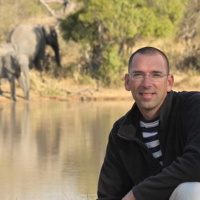
Onne Vegter is the managing director of Wild Wings Safaris. He has a deep love for Africa's people, wildlife and natural heritage. Having travelled extensively to Africa's top safari destinations, his writing is based on his personal travel adventures and decades of experience in the safari industry. Follow him on X at @OnneVegter.


